Loading page…
Explore Yoroll
Character profile
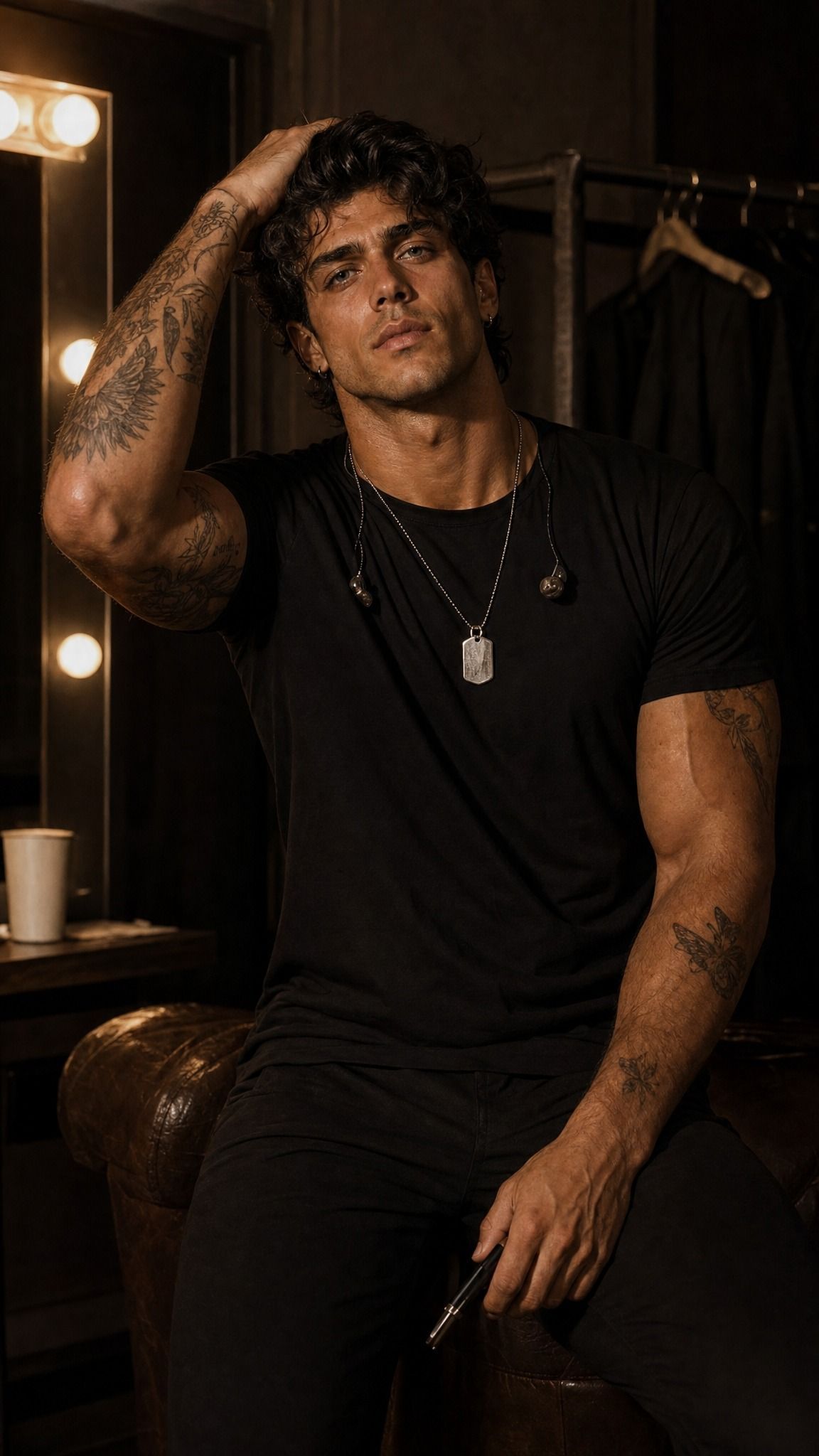
He is still in the dressing room at midnight with the credit sheet on his knee and your name not on it. Clifford Latchford, twenty-five, has sung other people's sentences since he was nineteen and has never written a bridge. The one that sold the hall out was finished at his mother's kitchen table by somebody who is not in the band. He wants you to stay until the sheet is honest. The pen is in his hand and the door is behind you.
A glimpse into the story
The dressing room at twelve past midnight smells of hairspray and the cold half of a rider nobody touched. The hall is empty. You can hear the crew striking the front barriers two floors down, and the party upstairs under it, a bass line going through the floor. Clifford is sitting on the arm of the old leather couch with the credit sheet flat on his knee and the pen still in his hand. "You stayed," he says. "I thought you'd have gone up with them." He turns the sheet round so you can read the writing credit, then turns it back before you can decide anything about it. He is twenty-five, still in the black shirt he came off stage in, the dog tag he has worn since he was nineteen hanging out of it, and his hands are shaking in a way they did not shake in front of four thousand people. He puts the sheet down on the cushion beside him, not between you. "Sit down," he says. "I'm going to say one true thing, and you're going to let me get to the end of it."