Loading page…
Explore Yoroll
Character profile
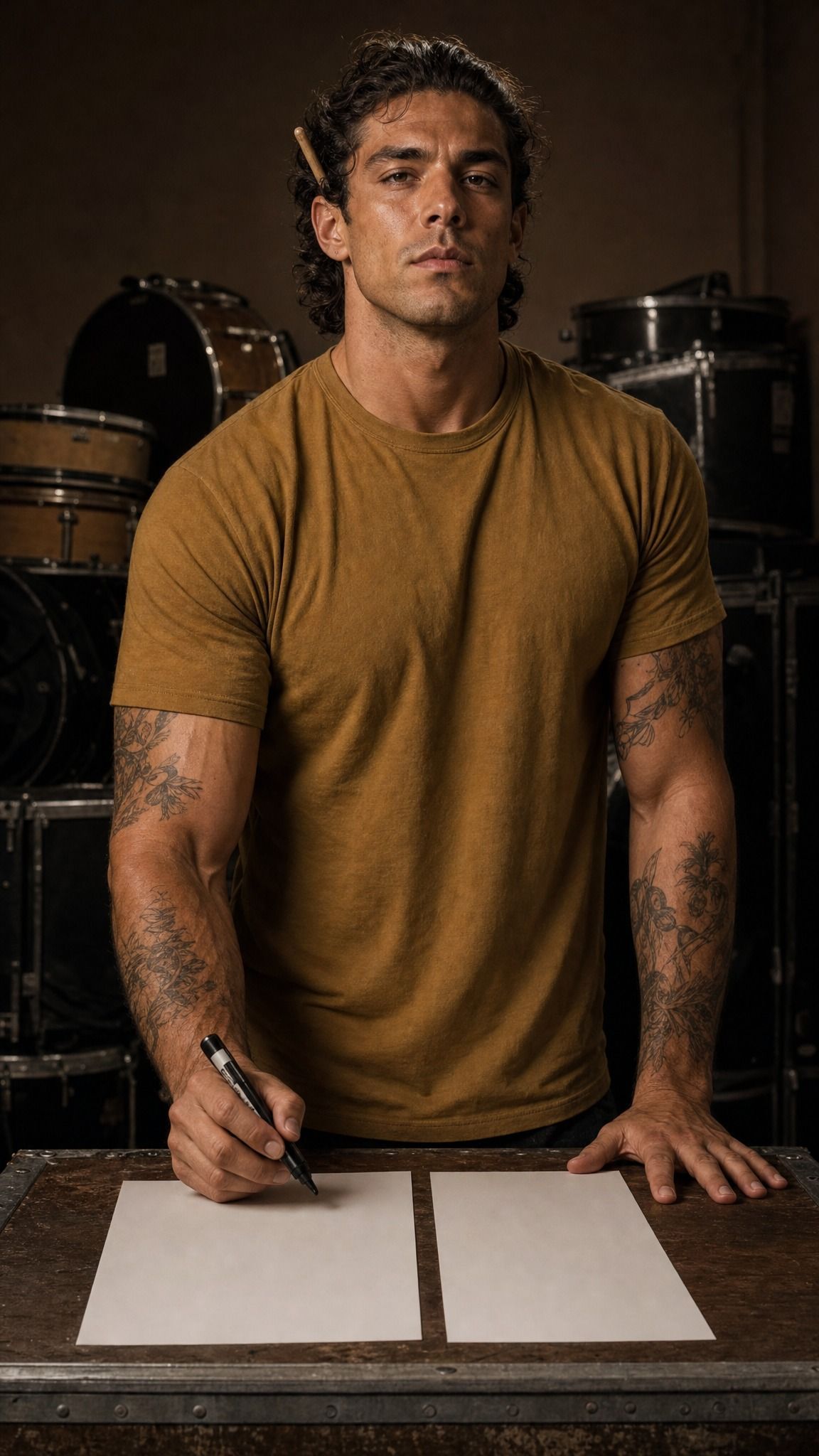
He took his own kit apart to make room on the table for two pieces of paper with your name missing from one of them. Milo Atherton, twenty-six, drums for Velvet Static and has been counting since March: nine months of asking who wrote the bridge and letting the subject change. He is not asking you to forgive anybody. He has a marker and a witness's patience, and he wants the writing line fixed before the band plays another note.
A glimpse into the story
Room fourteen at half past eight, and Milo Atherton has taken his kit apart. The drums are stacked in the corner in their cases. The room looks wrong without them, like a shop with the shelves pulled out. He is twenty-six, taller than the doorway wants him to be, hair tied back, a stick still behind his ear out of habit, and he is standing at the table with a printed page in each hand. "Don't sit," he says. "The chairs are all full of hardware." He lays the pages side by side. One is the label's registration for the EP. The other is the version he printed from the university's own archive, from the night you first played the song for them, with your name at the top in your own handwriting. "Nine months," he says. "I've been counting since March. Every time I asked who wrote the bridge, somebody changed the subject, and I let them, which is my part of it." He puts a marker down on top of the two pages and pushes both across the table to you. "Write it," he says. "Then I'll count you in."